

Awọn iwa Musulumi ninu Al-Qur’an
Awọn iwa Musulumi ninu Al-Qur’an
Las virtudes y derechos de los compañeros
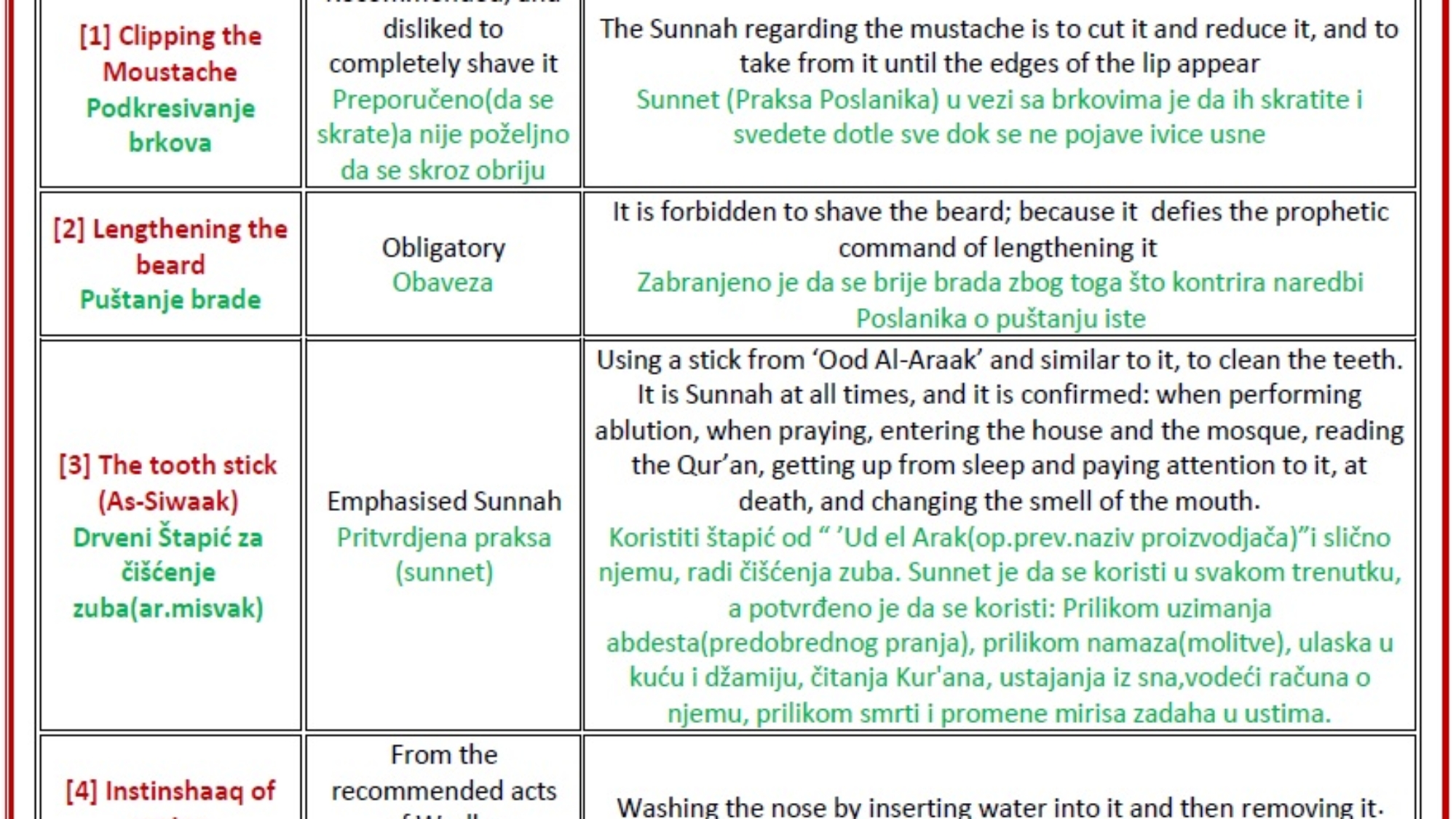
Natural Cleanliness Rituals
Urodjeni obredi čistoće
The attributes that Allah created people with (the fitrah)
Urodjene osobine sa kojim je Allah stvorio ljude
Human beings have a tendency and a basic need for it. However, the society around him them affects them. They have been mentioned in many authentic prophetic traditions (Ahaadeeth).
Ljudska bića imaju sklonost i osnovnu potrebu za tim. Međutim, društvo oko njih utiče na njih.Navode se u mnogim autentičnim Poslanikovim govorima (hadisima).
Explanation Pojašnjenje The Ruling
Propis The Rituals (Sunan) Obredi(Preporučeni u Sunnetu)
The Sunnah regarding the mustache is to cut it and reduce it, and to take from it until the edges of the lip appear
Sunnet (Praksa Poslanika) u vezi sa brkovima je da ih skratite i svedete dotle sve dok se ne pojave ivice usne Recommended, and disliked to completely shave it
Preporučeno(da se skrate)a nije poželjno da se skroz obriju [1] Clipping the Moustache Podkresivanje brkova
It is forbidden to shave the beard; because it defies the prophetic command of lengthening it
Zabranjeno je da se brije brada zbog toga što kontrira naredbi Poslanika o puštanju iste Obligatory
Obaveza [2] Lengthening the beard
Puštanje brade
Using a stick from ‘Ood Al-Araak’ and similar to it, to clean the teeth. It is Sunnah at all times, and it is confirmed: when performing ablution, when praying, entering the house and the mosque, reading the Qur’an, getting up from sleep and paying attention to it, at death, and changing the smell of the mouth.
Koristiti štapić od “ ’Ud el Arak(op.prev.naziv proizvodjača)”i slično njemu, radi čišćenja zuba. Sunnet je da se koristi u svakom trenutku, a potvrđeno je da se koristi: Prilikom uzimanja abdesta(predobrednog pranja), prilikom namaza(molitve), ulaska u kuću i džamiju, čitanja Kur’ana, ustajanja iz sna,vodeći računa o njemu, prilikom smrti i promene mirisa zadaha u ustima. Emphasised Sunnah
Pritvrdjena praksa (sunnet) [3] The tooth stick (As-Siwaak)
Drveni Štapić za čišćenje zuba(ar.misvak)
Washing the nose by inserting water into it and then removing it.
Ispiranje nosa tako da se voda ušmrkne unutar nosa i nakon toga izbaci From the recommended acts of Wudhu
Od preporučenih radnji prilikom uzimanja abdesta [4] Instinshaaq of water
Ušmrkavanje vode u nos
Trim the nails, cut them; because leaving it there is a reason for dirt to collect under it. Odrežite nokte i isecite ih; jer ostavljajući ih (op.prev.dugačkim i neurednim) postoji mogućnost da se ispod njih skuplja prljavština. Recommended, and not befitting to delay it for more than 40 days
Preporučeno, i ne dolikuje da se odlaže duže od 40 dana [5] Clipping the nails
Skraćivanje noktiju
Cleaning the places where dirt collects; They are meanders and knots in the fingers (between the fingers). Vodjenje računa o čistoći mesta na kojima se sakuplja prljavština,posebno u prevojima izmedju prstiju Recommended
Preporučeno [6] Washing the legs
Pranje nogu
It is the removal of hair that grows in the armpit, whether it was removed by plucking, shaving, or otherwise. Because it removes it from the cleanliness and cuts the foul odor.
To je uklanjanje dlačica koje rastu ispod pazuha, bilo da su uklonjene čupanjem, brijanjem ili na neki drugi način. Zato što se time uklanja nečistoća i neprijatan miris. Recommended, and not befitting to delay it for more than 40 days
Preporučeno, i ne dolikuje da se odlaže duže od 40 dana [7] Plucking armpit hair
Čupanje dlaka ispod pazuha
The hair around the private parts.
It can be removed without shaving; Like manufactured removers. Dlake oko intimnih delova.
Mogu se ukloniti bez brijanja; kao što su i posebna sredstva za uklanjanje (op.prev.vosak i sl.) Recommended, and not befitting to delay it for more than 40 days
Preporučeno, i ne dolikuje da se odlaže duže od 40 dana [8] Shaving pubic hair
Brijanje dlaka sa intimnih delova
Removing what comes out of the two pathways, by washing with water and the like, from the place of exit, and what is close to it. Uklanjanje onoga što izlazi iz dva fiziološka otvora, pranjem vodom i sl., sa mesta izlaska i onoga što je blizu njega. From the etiquettes of relieving oneself Bonton i postupak kojim se sebi olakšava [9] Istinjaa
Ispiranje nakon fiziološke potrebe
Washing the mouth by inserting water into it and then removing it
Ispiranje usta ubacivanjem vode unutra, a zatim izbacivanjem. From the recommended acts of Wudhu
Od preporučenih radnji prilikom uzimanja abdesta [10] Rinsing the Mouth
Ispiranje usta
It is the cut of the skin that covers the glans; so that dirt does not gather in it, and so that he can be clear of urine.
To je rez kože koji pokriva vrh muškog polnog organa; da se u njemu ne bi skupljala prljavština i da bi mogao da bude čist od urina. Obligatory for men, recommended for women if needed Obaveza za muškarca a preporučeno za ženu ako za tim postoji potreba [11] Circumcision
Obrezivanje
A’isha reported:The Messenger of Allah (ﷺ) said: Ten are the acts according to fitrah: clipping the moustache, letting the beard grow, using the tooth-stick, snuffing water in the nose, cutting the nails, washing the finger joints, plucking the hair under the armpits, shaving the pubes and cleaning one’s private parts with water. The narrator said: I have forgotten the tenth, but it may have been rinsing the mouth. (Narrated by Muslim)
Od Aiše se prenosi da je Božiji Poslanik, mir i spas neka je na njega, rekao:
“Deset stvari su urođena svojstva (ar.fitra): skraćivanje brkova, puštanje brade, upotreba misvaka, čišćenje nosa vodom, podrezivanje nokata, pranje nogu između prstiju, čupanje dlaka ispod pazuha, uklanjanje dlaka sa stidnih mesta, pranje vodom posle nužde.'” Prenosilac kaže: “Desetu stvar sam zaboravio, a mislim da je ispiranje usta.”
On the authority of Abu Hurayrahon the authority of the Prophet (ﷺ), said: “Five things are part of the fitrah: Circumcision…” Agreed upon (Bukhari and Muslim)
Ebu Hurejra prenosi od Verovesnika da je rekao: “Urođenih svojstava ima pet: “Obrezivanje”…itd.
Source/Izvor: Fathul Mu’een Fee Taqreeb Manhaj As-Saalikeen Wa Tawdheeh Al-Fiqh Fee Ad-Deen by Shaykh Haytham Sarhaan, 1st edition 1442 AH
БӘХЕТЛЕ ТОРМЫШНЫҢ ФАЙДАЛЫ
КАГЫЙДӘЛӘРЕ
الوسائل المفيدة للحياة السعيدة للسعدي
“БӘХЕТЛЕ ТОРМЫШНЫҢ
ФАЙДАЛЫ КАГЫЙДӘЛӘРЕ”
Автор: Габдеррахман ибн Насыр
Әс-Саади (1307-1376 h.e.). Үз
вакытының бөек галимнәренең
һәм имамнарының берсе.
Шәйх Һәйсәм Сәрхән
اللغة التترية
Телнең исеме
حقوق الطبعة متاحة
يسمح بالطبع والنشر
Бастыру һәм тарату рөхсәт ителә
Dr. Haytham Sarhan
ALSARHAAN.COM – MAHADSUNNAH.COM
Collection of Important Books for Every Muslim
مجموع المتون المهمة لكل مسلم
[الجزء الأول]
Collection of Important Books for
Every Muslim
[Volume I]
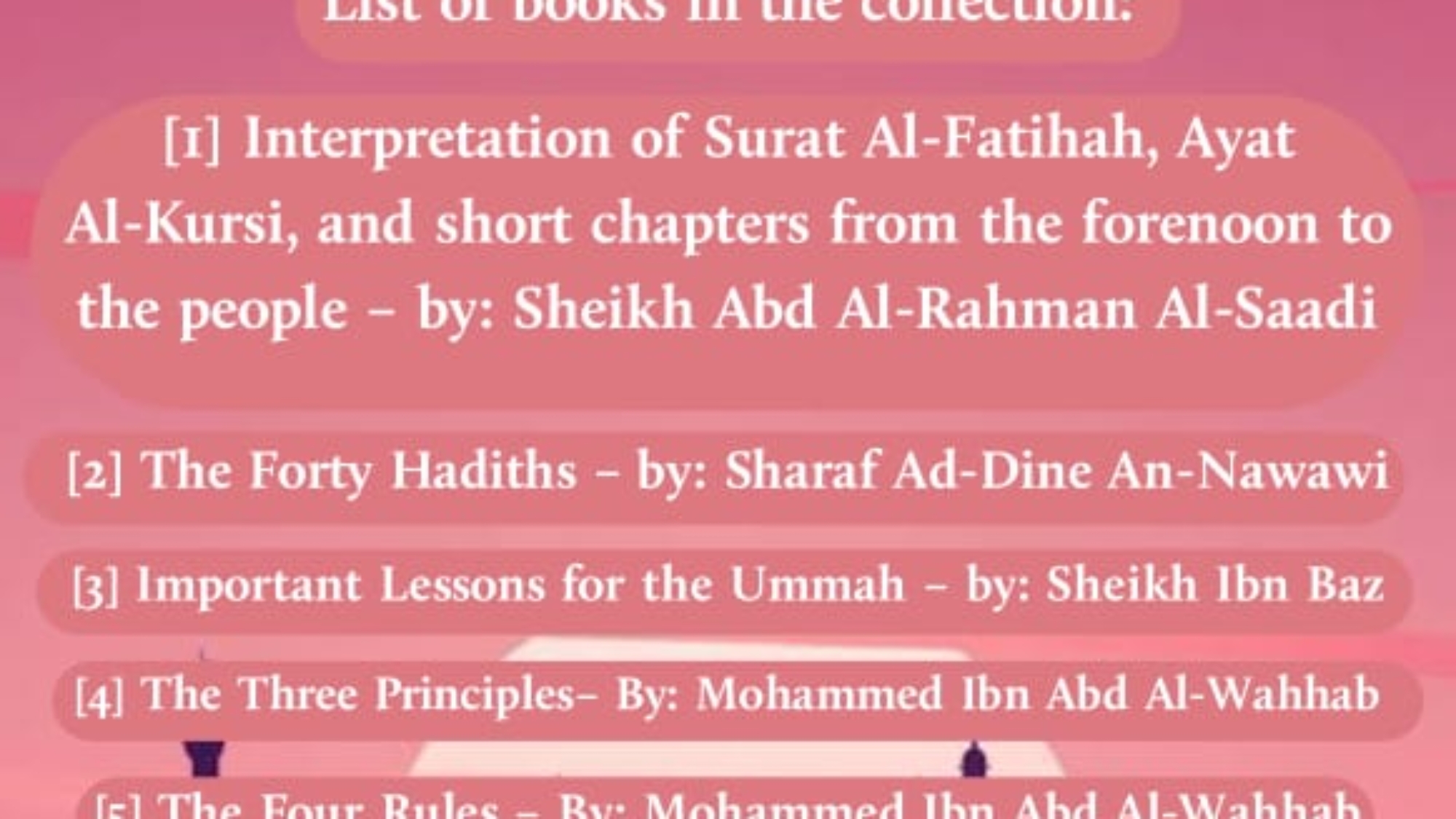
List of books in the collection:
[1] Interpretation of Surat Al-Fatihah, Ayat
Al-Kursi, and short chapters from the forenoon to
the people – by: Sheikh Abd Al-Rahman Al-Saadi
[2] The Forty Hadiths – by: Sharaf Ad-Dine An-Nawawi
[3] Important Lessons for the Ummah – by: Sheikh Ibn Baz
[4] The Three Principles- By: Mohammed Ibn Abd Al-Wahhab
[5] The Four Rules – By: Mohammed Ibn Abd Al-Wahhab
[6] The Nullifiers of Islam – By: Mohammed Ibn Abd Al-Wahhab
111
اللغة الانجليزية
English
Dr. Haytham Sarhan ALSARHAAN.COM – MAHADSUNNAH.COM
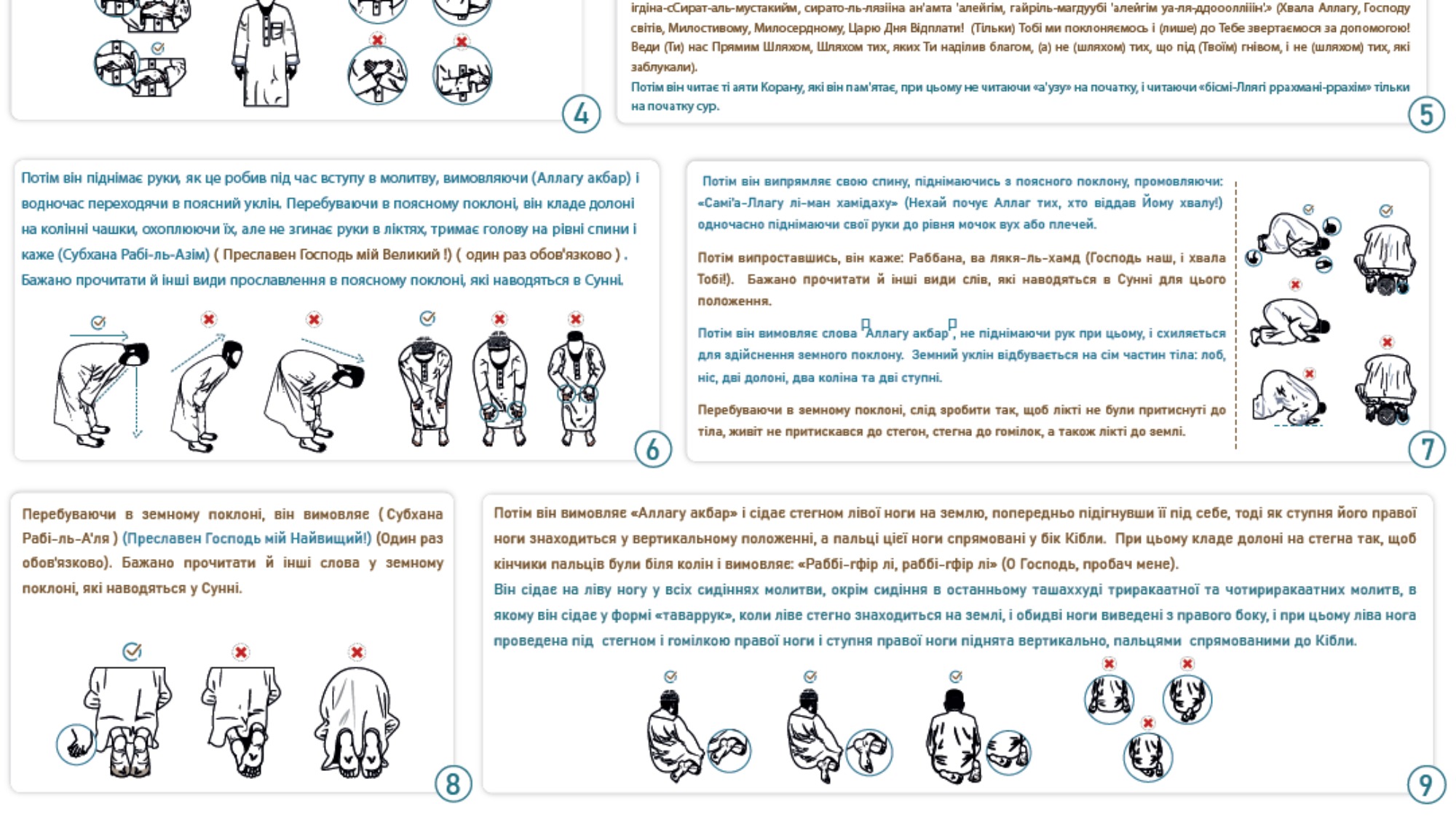
Опис молитви пророка нехай благословить його Аллаг і вітає – банер українською мовою, підготовлений шановним шейхом доктором Хейсамом Сарханом. У ньому міститься короткий опис молитви пророка, нехай благословить його Аллаг і вітає, ніби ти його бачиш, починаючи з «такбіра» (слів «Аллагу акбар»), і закінчуючи «таслімом» (словами «Ас-Саляму Алейкум уа рахмату-Ллаг» ). Банер супроводжується зображеннями
Lo recomendado para el ayunante
1- Algunas tradiciones proféticas sobre el ayuno recomendables para el ayunante
2- Tipos de comidas y bebidas que el Mensajero de Dios (que la paz y las bendiciones de Allah sean con él) solía hacer para la ruptura de su ayuno y su refrigerio de la madrugada
3- La virtud de ofrecer el desayuno (iftaar) a quien está ayunando
4- La “Umrah” (peregrinación menor) es recomendable en cualquier momento durante Ramadán
5- Tuvo una pelea con sus padres antes de Ramadán; ¿qué le aconsejan que haga?
ما يستحب للصائم
1- بعض سنن الصيام التي يستحب للصائم المحافظة عليها
2- الأطعمة والأشربة التي كان يتناولها رسول الله صلى الله عليه وسلم في إفطاره وسحوره
3- فضل تفطير صائم
4- استحباب العمرة في جميع رمضان
5- اختلف مع والديه قبل دخول رمضان فبم تنصحونه؟
Akhlak Seorang Muslim
Dalam Alqur’an
اللغة الإندونيسية
Bahasa Indonesia
ALSARHAAN.COM
mahadsunnah.com
MORALET E MUSLIMANIT
NE KURAN
Autor: Doc: Hejthem Serhan, mesues ne insitutin e
Xhamise se Profetit, lavderimet dhe paqja e Allahut
qofshin mbi te.
اللغة الألبانية
GJUHA SHQIPE
ALSARHAAN.COM
MAHADSUNNAH.COM
Mga Katuruan Kapag May Natagpuan sa Daan